Spider-Man Saved My Life
a tale of transness and evangelicalism

There were two early 2010s live action superhero movies that shook me to my core and radically altered my perspectives on the world and myself. The first was the original Thor movie (2011), which came out during the cultural rise of superheroes, in an era when it was becoming mainstream to like superheroes but before superhero fatigue set in after Marvel/Disney churned out multiple half-baked superhero movies a year to culminate in yet another bland crossover experience. I watched Thor for the first time at a friend’s house, where the friend’s mom kept making comments about how evil Loki was, shaking her head at the magnitude of his malice. Instead, I saw a broken and lonely man lost in the anguish and confusion of having been lied to and taken advantage of his entire life, and as a result someone who was vulnerable to continued manipulation and abuse. Loki as portrayed in Thor helped crack apart some of the dichotomous good/evil thinking I was steeped in while growing up, and he showed that “evil” is nuanced and slippery and not necessarily something someone is born into or chooses once and then is doomed to for life.
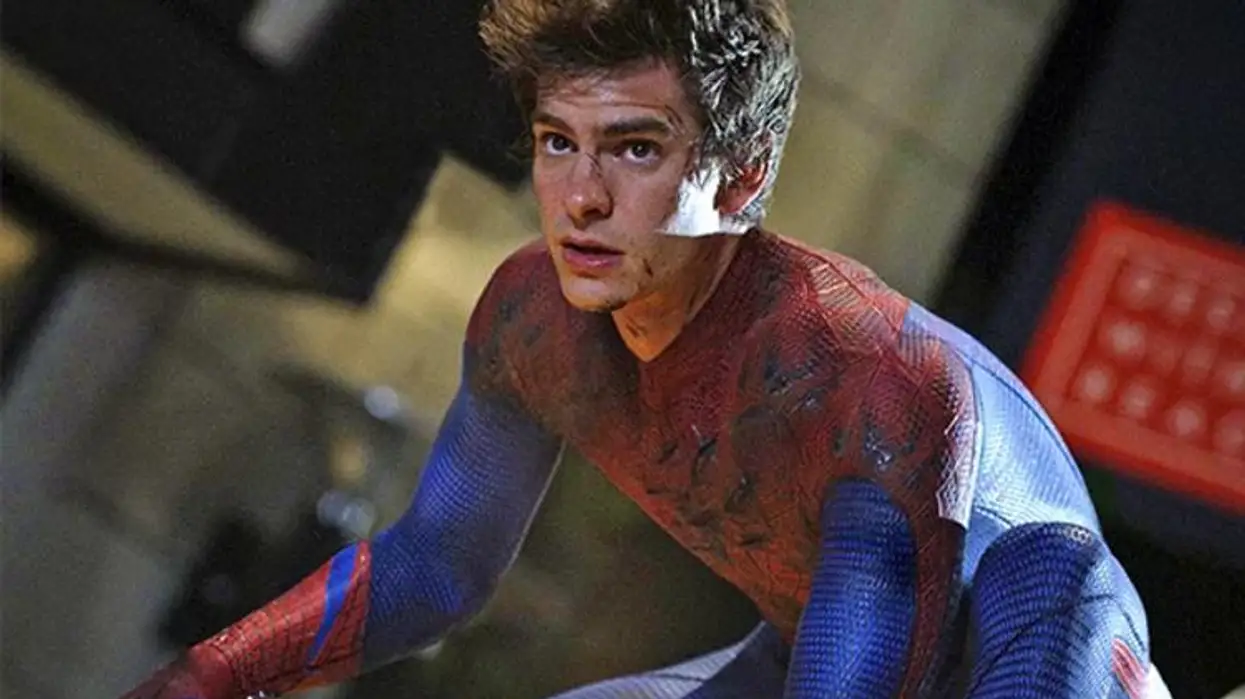
The other movie was 2012’s The Amazing Spider-Man, starring Andrew Garfield.
I think it’s safe to say that I was a little obsessed with this movie, to the point that I started writing one or two of my own superhero/Spider-Man-esque stories. A large part of my instant love for the movie was due to Garfield’s raw, vulnerable, deeply human portrayal of Peter Parker; Garfield isn’t an actor, he’s Peter himself. I could see myself in him, my bottled-up teenage angst displayed on the screen in his strong, tumultuous emotion, both of us trying to navigate a yawning chasm of who we were and who we wanted to be.
I saw, too, the realization of a dream that I didn’t have the words for at the time: Garfield’s Peter gave me a potent sense of gender envy. I wanted to be strong and heroic like him, and smart, and effortlessly, beautifully masculine. I interpreted it as a crush on the character, but I never actually dreamed of dating Peter or kissing him, much less holding his hand; I dreamed instead of being him, but back then my ability to imagine myself as someone else was so restricted and stunted by my religious upbringing that all I was able to do was picture myself as the girl version of Peter. Even that wasn’t quite right, but it was all I had.
From that premise, I built a whole world in my head. What if a girl’s boyfriend was a superhero, but he was killed in action, so she took up his mantle? I envisioned a book where the first half was told first-person from his POV. The stakes are high, but the reader feels assured that he can’t die since there’s still half a book left! And then it suddenly cuts to her—maybe his last chapter ends with him blacking out or getting wounded—as she drops a plate of food or crumples to her knees after hearing the news reports that the city’s vigilante superhero is killed in battle.
It was the closest I could get without the concepts and words and even permission to dream bigger. If I'm honest, I don’t think I even knew trans people exist until well into college.
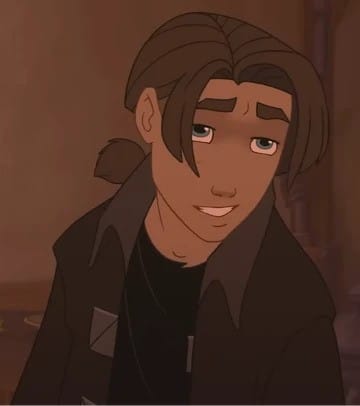
Now, I hold those glimmers of my transness, these sparkling fictions somehow glimpsed through the dense fog of my upbringing and understanding, very dear to my heart. Peter Parker in The Amazing Spider-Man and Jim Hawkins in Treasure Planet and, the earliest in my memory, Little Creek in Spirit: Stallion of the Cimarron. These and others set an aching longing deep in my chest, one that, for a long time, I labeled as crushes, and that would return periodically throughout my life (most recently, admittedly, due to both Ilya and Shayne in Heated Rivalry, although that time around I had the proper language to describe and process those feelings).
Confusing gender feelings—things that I experienced, but didn’t have the words for, didn’t have the concepts or even imagination to begin to pull together—weren’t all that that movie, that Peter, gave me. Through Garfield’s Peter, I could also experience some of the anger, the burning rage, I felt in my own heart but was not allowed to process, embody, and then release. I kept the anger bottled up inside, directed at myself and seething below the surface.
As I was taught—through explicit bible lessons and behavior modeled in church and expectations outlined by my parents—that anger is not an appropriate emotion for children, especially for girls. I now know that anger threatens the patriarchal power structures of the nuclear, white-supremacist family and the abusive hierarchies of the evangelical church. Anger can often arise from recognizing injustice around you or seeing that you were treated poorly and deserve better. It’s a strong emotion that can compel people toward action like asking questions, resisting oppression, and fighting back—all threats to the oppressive system. Because of this, I was never taught healthy ways to cope with my anger; instead, anger was positioned as being ungrateful or impatient, anger was talking back and challenging authority, anger was a sin. Only my dad and, occasionally, to a lesser and more nuanced degree, my mom were allowed to have and hold and show anger. Good christian children—especially girls—cannot have anger directed toward their siblings or parents or friends, and certainly not toward god. The only place my anger was allowed and encouraged was on the soccer field—my “mean streak,” as my dad called it, when I got knocked over or the ball was stolen from me, and I was revitalized with a new resolve, a determination, to right that wrong.
I learned from watching my older brother get in trouble with our parents, time and time again, what to do and not do in order to keep myself safe from punishment. I became quiet and docile and obedient. I dampened my emotions so much that, looking back, I wonder if I even felt anything aside from anxiety and self-loathing in high school. As a teen, evangelicalism fed my religious/scrupulosity OCD; moving through the harsh and unforgiving social and physical dynamics of high school grated against my unmanaged autism; and a deep discomfort with my body and how society and the church say me as a girl led to an eating disorder. I only cried a few times in that era of my life, and those moments tended to happen during communion at church, when I felt too sinful and broken—too vile—to partake in that community event. I remember talking to my friends, telling them that I never cried from movies or books or real life, and, as a girl, my lack of tears was just another way I felt broken.
But Garfield’s Peter Parker felt rage and sorrow in deep, overwhelming measure. Watching him move through the world was gut-wrenching, a window into the full range of human emotion that I felt cut off from, that I was not allowed to experience or access, or maybe that I didn’t deserve to. The Amazing Spider-Man was also another superhero movie I watched with a ruthlessly judgemental fundamentalist woman, this time my grandma (rest in piss). She called Peter disrespectful, shook her head and tutted at his teenage emotion and behavior. But, as with Loki, I understood what was happening as if I was living it because in a way I was. Of course he’s disrespectful, he’s wildly confused and doesn’t know who to talk to! He feels so isolated and alone! I wanted to scream, but I didn’t. Always quiet, demur, respectful, responsible [deadname]. There was no way I would try to defend someone my grandma had judged so swiftly; the catharsis and resonance I experienced from watching Peter had to be kept secret, locked away almost as deep as my seething anger.
I wanted to be him, and there was no way to tell anyone that truth or acknowledge it myself: The quiet, awkward, nerdy (things I already was) boy who is good at art and skateboarding, and who can feel emotion and do something about it, and who becomes powerful and confident and then helps people even in the face of conflict and fear.
Because I was so scared of my own transness and emotion, it wasn’t until late high school that I drew a boy character for the first time. Before that, drawing a boy felt like a deep and shameful sin. I only drew girls, and I only dressed up girls in online paper-doll style games. Boys were off-limits, not allowed. I had to prove to myself and everyone else that I was a girl, that I liked being a girl and doing girl things, and that the sin of lust was not in my heart. I tried so hard, for so many years, to conform to femininity and others’ expectations of womanhood, but it was always so uncomfortable and awkward. Miserable and desperate, I knew I was failing, and I knew everyone else saw it, too. It wasn’t just my acne or the inexplicable discomfort I felt around my menstruation and chest growth, but it was also how I felt deeply uncomfortable in all-girl spaces, how I cried when my mom took me to Aeropostale to try on the trendy clothes my female peers wore (I knew such an attempt would remove all shadow of a doubt that I was a fraud of a girl), how I felt fake and awkward in feminine church clothes (even when wearing jeans!), how I shuddered when people applied words like “purse” and “diary” to my belongings.
Garfield’s Peter was part of a secret, forbidden world. My grandma saw a rebellious teenager, my cousins saw some kick-ass warrior they could strive to become, my uncle saw an angsty teen heart-throb abomination made out of a classic comic hero. But I saw myself as I could be: still awkward and nerdy, still me, but in a more comfortable way, with an assurance that comes from accepting your own body and emotions—sure, some things may need to be improved upon, some things could change, but at the heart lay a sense of internal peace and unity that I, in all my repressed transness and rage, otherwise could not envision.

In looking for an image for this post, I learned from Pride.com that Andrew Garfield off-handed pitched a bisexual Peter Parker who dates none other than Michael B. Jordan?? If that had happened my closeted little gay, trans ass would have DIED from the confused feelings lol. Thanks to the Wayback Machine for corrobating this claim.