Archives, A History
Or, how I got here (working toward an MLIS degree)
Maybe part of why I’m so drawn to archives is because of how much of my own personal archives I’ve lost, coupled with the difficulty of uncovering and telling the histories of my community of LGBTQ+ folks.
It didn’t start out that way, tho; I didn’t even know what archives were until my sophomore year of college, when I was looking for a new campus job because working the concession stand for basketball and football games was emotionally and psychologically killing me (I couldn’t eat popcorn for years afterward). And then “Archives Student Assistant” was listed there on the student jobs portal—or maybe (memory is, after all, fallible) my RA, who already worked in the archives, mentioned an opening, knowing I loved history and was quiet and shy, and thus would do well in a job where I was squirreled away to sift thru papers.
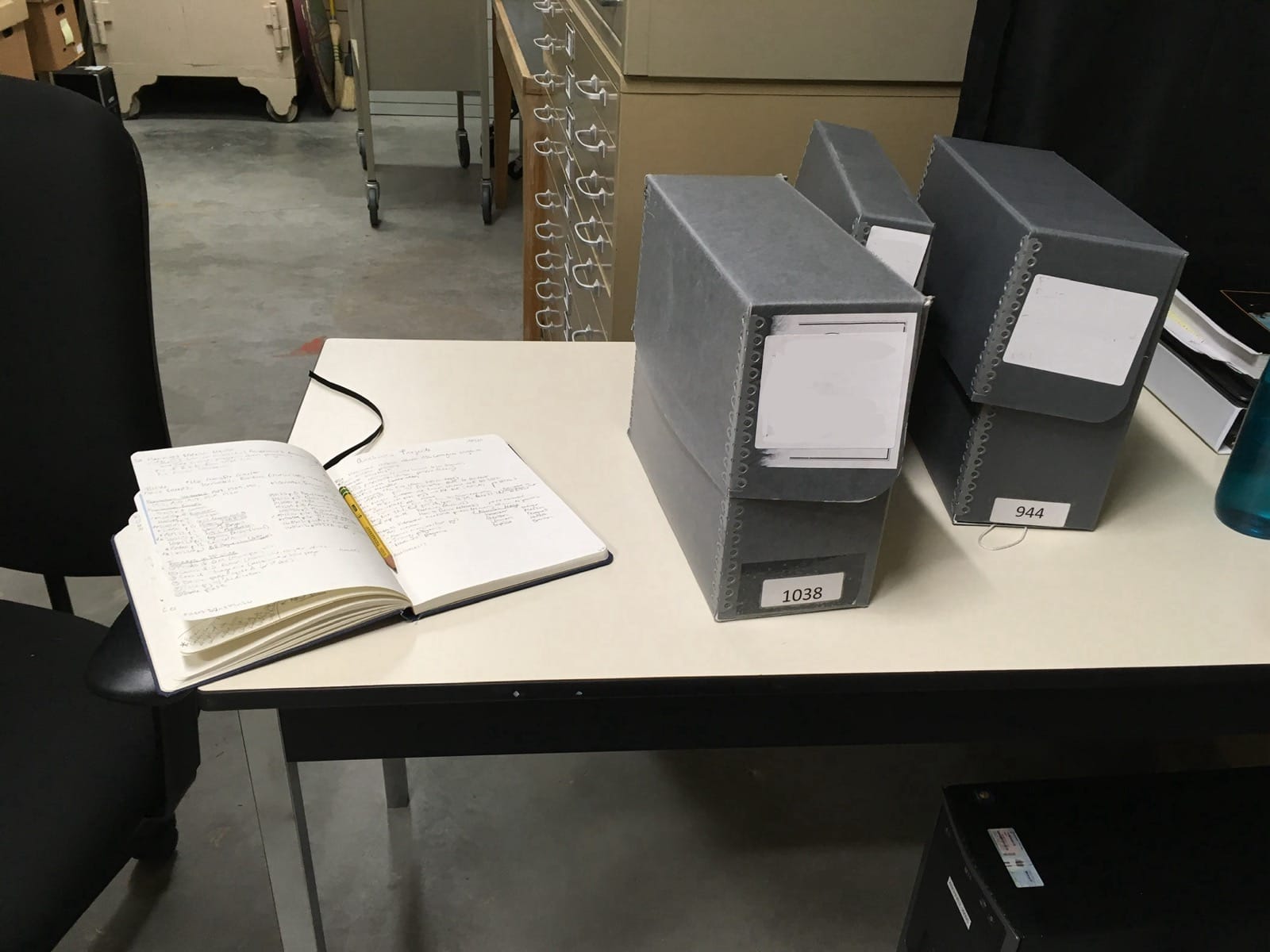
I really don’t remember how it happened, but whatever the inciting incident, I applied and was hired. It was late fall or early spring semester, and at the time I was hired, I was in talks with one of my professors about joining his summer research team to study a nineteenth-century manuscript. He would co-lead a small team of three students with the University Archivist herself, and we would all research the manuscript’s creation and historical and literary contexts. It was fortuitous timing, and it all came together with a serendipitous perfection that probably, at the time, felt fated by god hirself. I started working in the Special Collections & University Archives that spring semester, and then once the schoolyear ended, I stayed on campus for another six or so weeks to spend eight hours a day deciphering beautiful, colored-ink cursive, paging thru self-published scholarly(ish) pamphlets, reading biography after biography after biography. It was possibly the hardest summer of my life, but was certainly the hardest I had experienced up until that point: my grandpa, who lived half a country away, was diagnosed with cancer, and I felt so alone and isolated while I roomed with strangers and did more work than I’ve ever done before in my life. I had to cook all my meals for myself for the very first time, and I was coming off a semester of an eating disorder made worse by my best friend and roommate—and key support person—spending months studying abroad while facing her own health difficulties. Each weekday during that summer, I would leave the library at 5pm on the dot, my toes frozen from the chilly reading room air and the hot sun sending shivers down my spine as I walked, practically dragging myself with exhaustion, to the on-campus apartment I was staying in, where I would make a sorry excuse of a meal before curling up in bed to read the night away.
It was a lot for me to handle, practically too much, and yet, in the end, somehow the good was enough to rival the bad, was enough for me to return the following summer, after junior year, for more research. That second summer, I was no longer a novice, and my experiences with both research and roommates the previous year gave me a needed confidence boost (it also helped that I roomed with people I knew from my dorm).
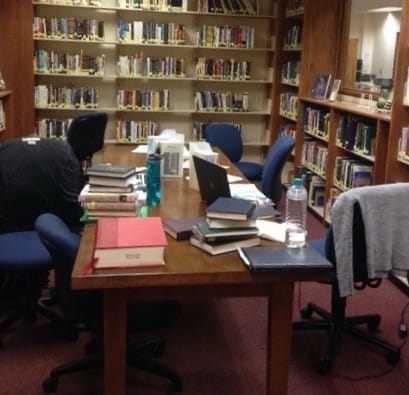
Also during my junior year, I fell in love with my archives job. My institution had a wacky approach to archiving that I now recognize is very non-standard and a bit heretical in terms of archival best practices: we would shamelessly split apart accessions and file their materials into collections grouped by topic or theme, not by originator or donor or creator. All the Academic Affairs files together, all the People: Biographical together and the Photographs and the Presidents (I can legitimately no longer remember our other categories…Student Affairs? Something: Chapel? Buildings & Grounds?). For those not familiar with archival science, separating donated materials apart like this (going piece by piece, paper by paper to weed and separate and re-house into entirely different collections) removes a lot of the important context around those individual items. Best practice is to keep materials together in the collection they arrived in, and, whenever possible, to maintain the original order of the files—how they were used is how they remain. You still go thru them—process them—to understand the collection and create a finding aid and remove materials that don’t belong (which depends on collection scope, but can include personally identifying materials like bank statements, for example), and there may be some physical re-arrangement, but a collection donated as one stays as one.
However, it would be five-plus years before I learned all of that. As an undergrad student—and then, post-graduation, as a part-timer and eventually a full-timer—I love sorting thru things, the feeling of putting items where they need to go, where they belonged. I loved the histories I glimpsed and the people I waved at across time in those archives. Some names and materials became so familiar that they were practically friends, and as a generally lonely and socially awkward person, I deeply valued that asynchronous human interaction. Processing also reminded me of the times when my dad, in rare moments of patience, would help me sort thru my copious piles of papers as a kid, all the drawings and half-written stories and whatever else I amassed in my elementary school bedroom.
During this era of archival work, I still had full access to the archives of my personal and community histories: I was an evangelical student working in the archives of an evangelical university. I was close with my parents, and whenever I visited home, I could flip open one of the many scrapbooks my mom made when I was younger, all lined up in the built-in shelves behind the living room tv, and I could study the photographs and relive the memories. Here’s me playing soccer, look at my rec-specs (glorified prescription goggles, as I couldn’t wear normal glasses on the field); here’s when we took that trip to Utah and I got dehydrated while white-water rafting on the Colorado River because I was afraid my waterbottle had gotten contaminated by the riverwater that splashed into the bottom of the raft (hello, contamination OCD); here’s me and my siblings in a massive snow fort, or sledding down the hill at the local sledding slope, or climbing the linden tree in the front yard on a bright summer day, or or or…
It was all there. The recorded histories kept safe in scrapbooks and on the SD cards of digital cameras, the oral histories shared around the dinner table and at family gatherings and in those small everyday moments when something reminds someone else of their childhood and they feel that spark of nostalgia mingled with a desire to unwind a memory in the company of others. And then at my university, I had at my fingertips over a century and a half of evidence of god’s handiwork on a community I was part of, the photographs and newspapers and meeting minutes placing me in an evangelical context that gave me comfort and security. I contributed to that history, too, and I made my mark on that place that had made its mark on me—I still sometimes think back to all the boxes and folders with titles penciled on in my handwriting.
But as with many things, I didn’t know what I had until I lost it.
Now, a little over five years after undergrad, I only speak to two of my relatives, both infrequently: my older brother, who lives in another country, and my great aunt, who lives in another state. Everything else, all the other familial relationships, fell apart when I came out as trans, but that’s a story for another day. Right now, we return to archives, to the family history I no longer have access to and the history of a community I am no longer a part of.
I’m currently in an MLIS program with the post-graduation goal of working in an LGBTQ+ archives—I caught the archiving bug back in undergrad, and my passion has shifted to emphasizing, preserving, and making accessible the often-obscured histories of queer people. In order to achieve this goal, I realized I wanted (and needed) an advanced degree. Within the program I selected, it’s not unusual for an assignment to include practice of XYZ skill or application of WXY topic by allowing the students to pick something from their life to analyze: write an archives paper on whatever you want that relates to something we discussed this semester, pick a physical book in your home to practice using this cataloguing system, choose a dataset that is interesting or personal to you to analyze.
Use a physical collection of family documents or photographs to write a pretend grant in order to practice project planning.
Oftentimes, there are alternatives: If you can’t settle on a specific topic or find a good fit, etc., then use this collection/dataset/what-have-you. Which is certainly appreciated. But it’s also fun and interesting to use the things you know and are already familiar with, to view that shelf of scrapbooks in a new light and use those family memories to learn and explore and turn the theory into practice.
The issue that I have started bumping into is that I don’t have access to the types of family collections I could otherwise use. Sure, I have my own journals if I want to take a somewhat egocentric approach, and I also have a small box of photographs from my deceased neighbor who always expressed a strong sense of privacy while she was alive (so I don’t think she’d want me pretending to digitize her wedding album for a class project; in fact, I should probably respect her wishes and shred those materials). But there are family things that I know exist, and that I deeply wish I could look through and consult, but I can’t because I cut ties with those toxic (transphobic, bigoted, stubborn, fundamentalist, evangelical) people. There are almost too many lost objects and records from my life: those rows of scrapbooks my mom made, the travel journals my mom made us write in as kids, the box (or was it a suitcase?) of old family photos and documents at my grandparents’ house—the one with things from when my ancestors immigrated (at least one illegally) from Slovakia and other parts of Europe. I have my own digital copies of some of these materials, but there’s more, I know there’s more, that I can’t access because of cutting their keepers out of my life. And then there are the old home videos my siblings and I created on my first digital camera—spoofs of Star Wars and the Scarlet Pimpernel that we wrote, directed, filmed, and acted in. Maybe some footage from when we all played sports. Even the stories I typed up on the family computer in middle and high school may still exist on a hard drive somewhere.
It’s really difficult—and at times painful like the sting of cleansing a wound—to be a transgender person wanting to work in archives, wanting to preserve community history, when your own personal, family history is lost to you. And I think that’s part of why I care so much. I don’t love archives just because my dad was a history teacher and raised me to study and think critically about and love history; I love archives because they’re some of the only places I can now find records and historical proof of people like me. Sure, you really have to dig sometimes, and it can be deeply emotional and difficult work (I will post something on this soon!), but it’s there, protected and preserved by people who are trained to make documents and photographs and digital files last as long as they possibly can.
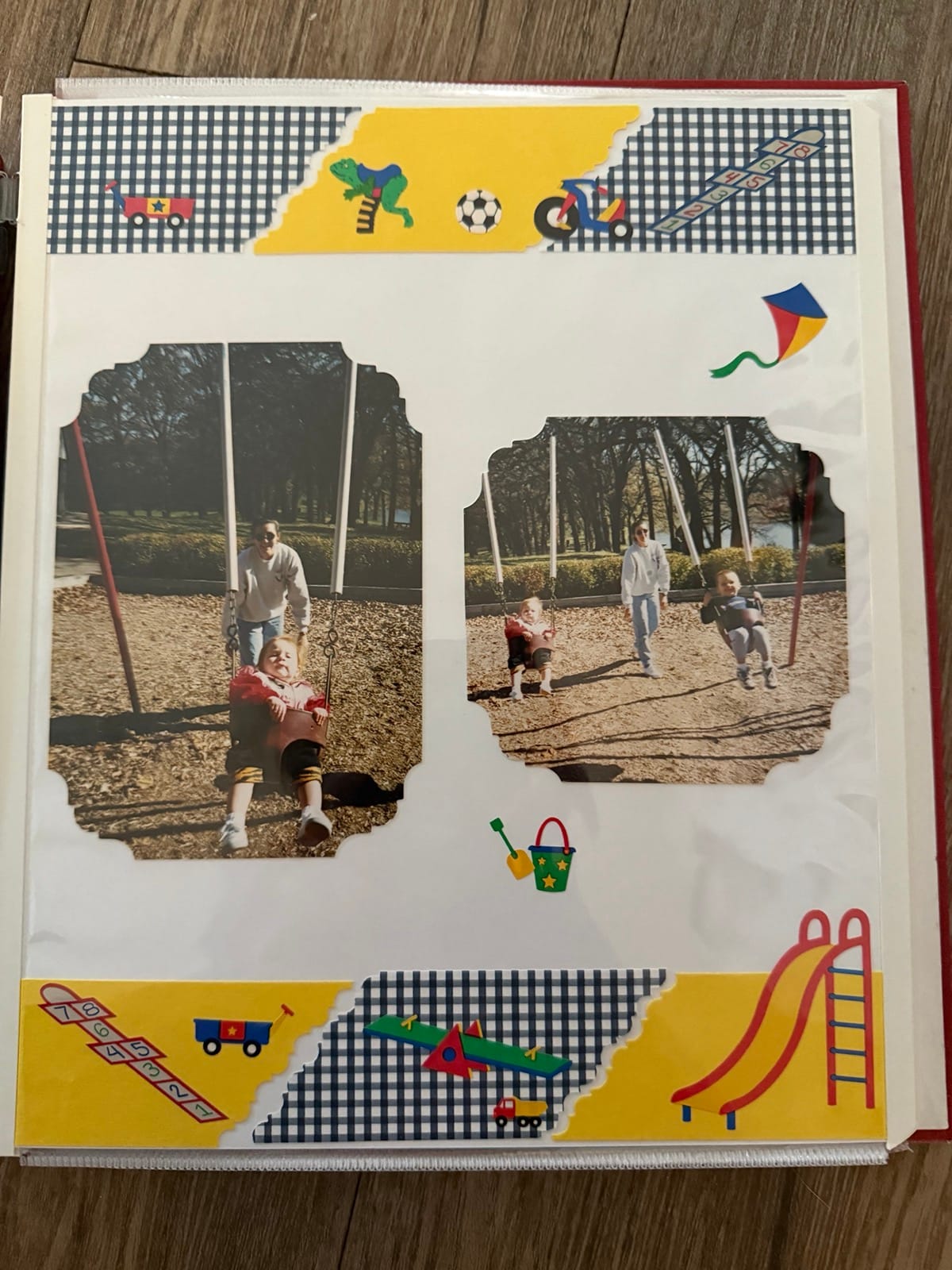
I’ll never see those scrapbooks again—the single one I have, documenting my first three years of life, was rescued by my older brother, and it’s too painful to look at these days—and I’ll never hear my grandpa talk about his father and the old country again. That knowledge is a deep and aching wound that will never fully heal and instead needs periodic care and cleaning. But I can still connect with other communities and other histories that are meaningful to me and that I am a part of, and I want to help other people do that, too, because it’s important to know who we are and where we come from and that we are not alone. Particularly now, as trans rights are under attack, it’s important to know that this is a decades-long fight, and that trans and gender-variant people have existed across time and cultures.
It is one of the few things I feel like I can control and participate in and make a difference with: Queer history matters, and I am determined to protect it and share it for however long I live. And as I do so, I will, hopefully, learn to accept the pain that my lost histories cause and to channel that emotion and experience into protecting the other histories that continue to be made.